
Tree Pruning Dos and Don’ts for Maryland Homeowners
Proper tree pruning is essential to maintaining the health, appearance, and safety of your trees. Done correctly, it promotes growth, prevents diseases, and minimizes potential hazards. However, improper pruning can cause significant damage. Here’s a quick guide to help Maryland homeowners master the basics of tree pruning.
Dos of Tree Pruning
1. Prune at the Right Time
For most trees, the best time to prune is late winter or early spring, before new growth begins. In Maryland, this typically falls between February and early April. Pruning during dormancy minimizes stress on the tree and reduces the risk of pest infestations and diseases.
2. Use the Right Tools
Invest in sharp, clean tools like pruning shears, loppers, and saws. Dull tools can tear branches, leaving the tree vulnerable to infections. Disinfect your tools between cuts, especially when dealing with diseased branches, to prevent the spread of pathogens.
3. Focus on Dead, Diseased, or Damaged Branches
Prioritize removing dead, diseased, or storm-damaged limbs to improve tree health and safety. Identifying and addressing weak or crossing branches early helps prevent future structural issues.
4. Maintain the Tree’s Natural Shape
Prune with the tree’s natural growth pattern in mind. Avoid excessive cutting that alters its overall form. A well-shaped tree not only looks better but is also structurally healthier.
5. Consult an Arborist for Large Jobs
For trees near power lines, large limbs, or significant pruning, hire a certified arborist. Maryland’s climate and tree species often require specialized care that professionals are equipped to handle. Shy Tree, led by a Board-Certified Master Arborist, offers expert tree care services, ensuring your trees are pruned safely and effectively.
Don’ts of Tree Pruning
1. Avoid Topping
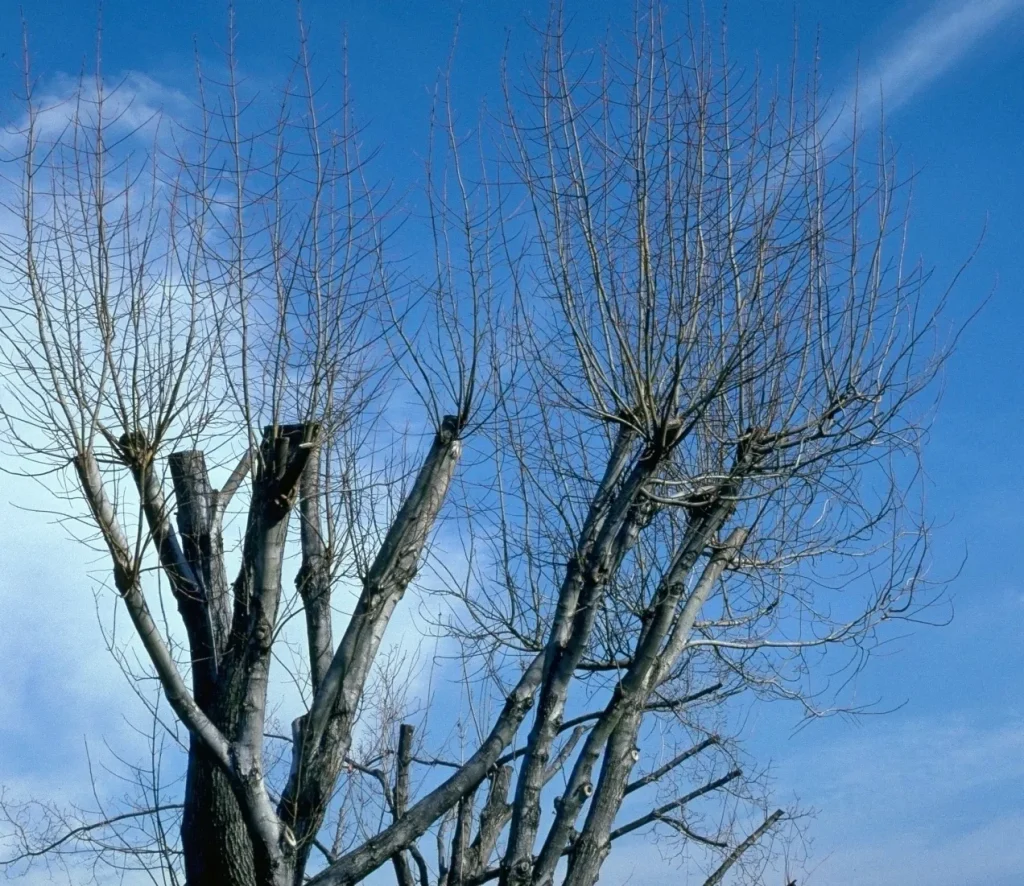
Topping—cutting off the top of a tree’s canopy—is harmful. It weakens the tree, invites pests, and can lead to excessive sprouting that ruins its structure. Opt for crown reduction or applying plant growth regulators instead if height control is needed.
2. Don’t Prune During Active Growth
Pruning in late spring or summer can stress the tree, as it’s actively growing and using energy reserves. Exceptions include removing broken limbs after storms or addressing immediate safety hazards.
3. Avoid Over-Pruning
Removing more than 25% of a tree’s foliage at one time can shock the tree and hinder its growth. Prune conservatively to maintain its health and vigor. Often untrained tree cutters or landscapers, hired to thin out a tree, will over prune each limb by removing all of the branches and foliage leaving only the upper 1/3 – 1/4 of the branches. This is called “lions tailing”. This improper pruning practice eliminates the trees interior growth and ability to maximize its ability photosynthesis and produce carbohydrates.
4. Don’t Use Wound Dressings
Many homeowners mistakenly apply wound dressings or sealants to pruning cuts. Trees have natural mechanisms to heal, and these products can trap moisture and promote decay.
5. Never Cut Without a Plan
Random or haphazard pruning can damage the tree and lead to future problems. Assess the tree’s structure and plan your cuts carefully to ensure long-term health. Shy Tree offers prescription pruning. Prescription pruning is pruning with a purpose. Arborists have a goal to maintain tree health and meet the goals for the client.
some of those prescriptive pruning objectives include:
- Crown Cleaning
- Deadwood Removal
- Crown Reduciton
- Crown Elevation
- Selective Branch Removal
- Clearance Pruning

How Shy Tree Can Help
Shy Tree, owned by a Board-Certified Master Arborist, specializes in all aspects of tree care, including proper pruning techniques tailored to Maryland’s unique environment.
Our team can:
- Prune your trees at the optimal time to promote healthy growth.
- Use professional tools and methods to ensure clean, precise cuts.
- Identify and remove dead, diseased, or damaged branches safely.
- Prune trees to enhance their natural shape and architecture.
Additionally, we educate homeowners on the dangers of improper practices like topping and over-pruning. By working with Shy Tree, you can trust that your trees will thrive and your landscape will remain beautiful and safe.
Final Thoughts
Tree pruning is both an art and a science. Following these dos and don’ts ensures your trees thrive in Maryland’s unique environment. When in doubt, consult Shy Tree to safeguard your trees and enhance your landscape’s beauty.