
Why You Should Have an Arborist Airspade Your Trees: A Homeowner’s Guide
Trees are some of the most valuable assets on your property, offering shade, beauty, and increased property value. However, maintaining their health requires more than just watering and pruning. One specialized service that can significantly improve tree health is airspading. This technique, performed by a certified arborist, addresses hidden issues beneath the soil, such as compacted roots, mulch volcanoes, and girdling roots. Here’s why airspading might be the best choice for your trees.
What Is an Airspade?
An airspade is a tool that uses compressed air to safely remove soil around tree roots without damaging them. It’s an essential part of tree care that allows arborists to assess root health, correct problems, and improve the surrounding soil environment.
Understanding Soil Compaction: The Silent Tree Killer
Soil compaction is one of the most common and damaging issues for urban and suburban trees. When soil becomes too compacted, it loses the structure and porosity that tree roots need to thrive. While soil compaction can occur naturally over time, it is often exacerbated by human activities—especially during construction and landscaping.
Compaction from Construction
When homes are built, contractors must compact the soil to meet engineering specifications for stability. These specifications ensure a solid base for structures like foundations, patios, and driveways. However, the level of compaction required for engineering purposes is far higher than what trees need to thrive.
Trees require loose, well-aerated soil with sufficient pore space to allow for oxygen, water, and nutrients to move freely. Overly compacted soil makes it difficult for tree roots to penetrate or function effectively, leading to stress, poor growth, and increased susceptibility to pests and diseases.
Why Pore Space Matters
Healthy soil contains a balance of solids (minerals and organic matter) and pore space, which is filled with water and air. Ideally, soil composition includes:
- 25% Water: Vital for nutrient uptake and metabolic processes.
- 25% Air: Necessary for root respiration and the survival of beneficial soil organisms.
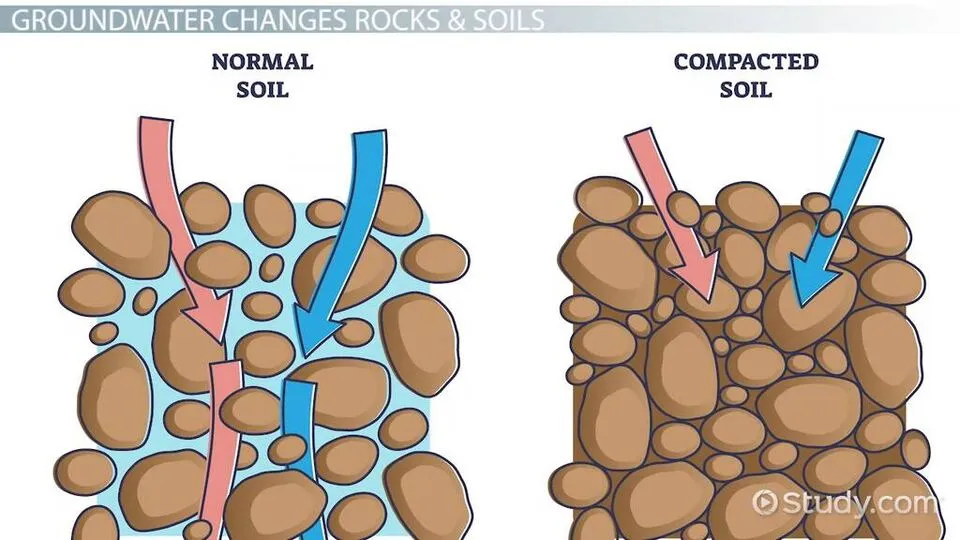
Compacted soil drastically reduces pore space, leaving roots starved of oxygen and water. This creates a hostile environment where trees struggle to grow and survive.
Nutrient Cycling and Soil Health
In natural forests, trees amend the soil over time through nutrient cycling. Leaves fall to the ground, decompose, and enrich the soil with organic material. This organic matter improves soil structure, enhances pore space, and provides a steady supply of nutrients that trees need to thrive.
However, in residential areas, this process is often disrupted. Homeowners frequently hire landscapers to remove fallen leaves, effectively stripping the soil of essential nutrients. Mulching leaves with a lawn mower is a better alternative. This practice:
- Improves soil structure and reduces compaction.
- Provides slow-release nutrients for trees.
- Eliminates the need for supplemental fertilization, which can sometimes harm the environment through runoff.
What Are Girdling Roots and Why Are They Harmful?
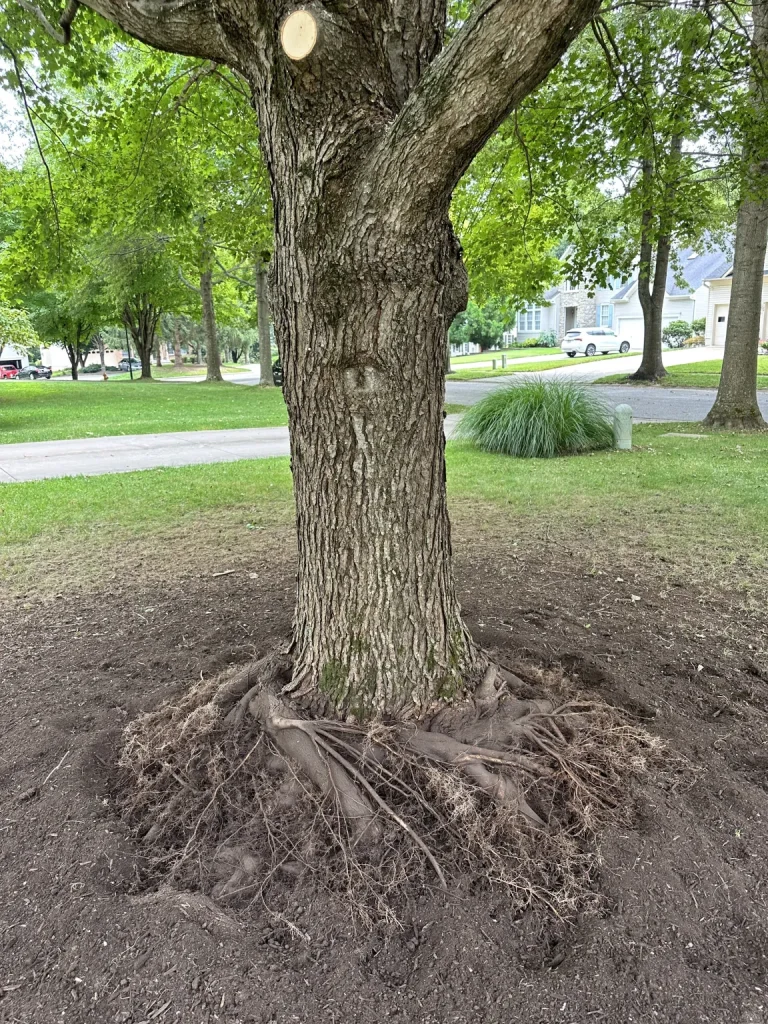
Girdling roots are another major issue that airspading can address. These roots grow in a circular or tangential pattern around the base of the tree trunk or over other established roots, instead of spreading outward into the soil as they naturally should. Over time, girdling roots can strangle the tree by compressing its vascular system, which transports water, nutrients, and sugars throughout the tree.
How Girdling Roots Form
- Improper Planting Depth: When a tree is planted too deeply, roots struggle to grow outward and instead grow upward or in circular patterns.
- Container Grown Trees: Trees grown in pots often develop girdling roots when left too long in their containers. These roots continue the circular growth pattern even after the tree is planted in the ground.
- Soil and Mulch Buildup: Excess soil or mulch piled against the trunk encourages roots to grow close to the trunk instead of outward.
- Compacted Soil: In dense or compacted soil, roots may grow around obstacles rather than penetrating the soil.
Why Girdling Roots Are Harmful
Girdling roots are problematic because they:
- Strangle the Tree: As roots encircle the trunk or other roots, they compress the tree’s vascular tissues, disrupting the flow of water and nutrients.
- Weaken Structural Stability: Trees with girdling roots are more likely to fail during storms or high winds because their roots lack proper anchorage.
- Increase Susceptibility to Decay and Pests: Roots pressing against the trunk can cause wounds that lead to rot and create entry points for insects or fungal pathogens.
Girdling roots can range in size from fine absorbing roots less than a millimeter in diameter to large structural roots up to two inches in diameter, capable of choking the tree over time.
How Girdling Roots Are Corrected
Correcting girdling roots involves carefully removing or pruning the problematic roots to restore the tree’s natural root structure and prevent further damage. Here’s how it’s done:
1. Uncovering the Root System
The first step in addressing girdling roots is to expose the root flare using tools like an airspade. This allows arborists to identify which roots are causing the problem.
2. Removing Adventitious and Fine Absorbing Roots
Adventitious roots (those growing in abnormal locations) or fine absorbing roots may grow over the root flare or other established roots. These are carefully pruned using hand pruners or small tools. Although these roots are small, they can still inhibit proper root flare development and tree health.
3. Pruning Larger Girdling Roots
Larger girdling roots, which can be two inches in diameter or more, are carefully removed to prevent further strangulation. For these roots, arborists may use:
- Hand Pruners or Loppers for medium-sized roots.
- Small Chainsaws for larger roots.
It’s critical to make clean cuts to ensure the tree can effectively compartmentalize the wounds. Clean cuts reduce the risk of decay or pest infestations and allow the tree to heal more efficiently.
4. Preventing Future Girdling Roots
After pruning, arborists often recommend practices to prevent new girdling roots from forming, such as:
- Ensuring the root flare remains visible and free of mulch or soil buildup.
- Proper planting techniques, ensuring trees are planted at the correct depth.
- Mulching properly, using no more than 2-3 inches of mulch and keeping it several inches away from the trunk.

When to Call an Arborist
You should consider airspading if:
- Your trees are showing signs of stress, such as yellowing leaves or stunted growth.
- Your property was recently constructed, with compacted or clay-heavy soil.
- You notice mulch volcanoes or soil buildup around tree trunks.
- Fallen leaves are removed from your property instead of being mulched or composted.
The Bottom Line
Airspading is a powerful tool to address one of the most overlooked aspects of tree care: soil health and root system issues. By relieving compaction, improving pore space, correcting girdling roots, and supporting natural nutrient cycling, airspading ensures your trees have the foundation they need to thrive. Combine it with simple practices like mulching leaves for a healthier, more sustainable approach to tree care.
Contact a certified arborist today to give your trees—and your soil—the care they need to thrive!