
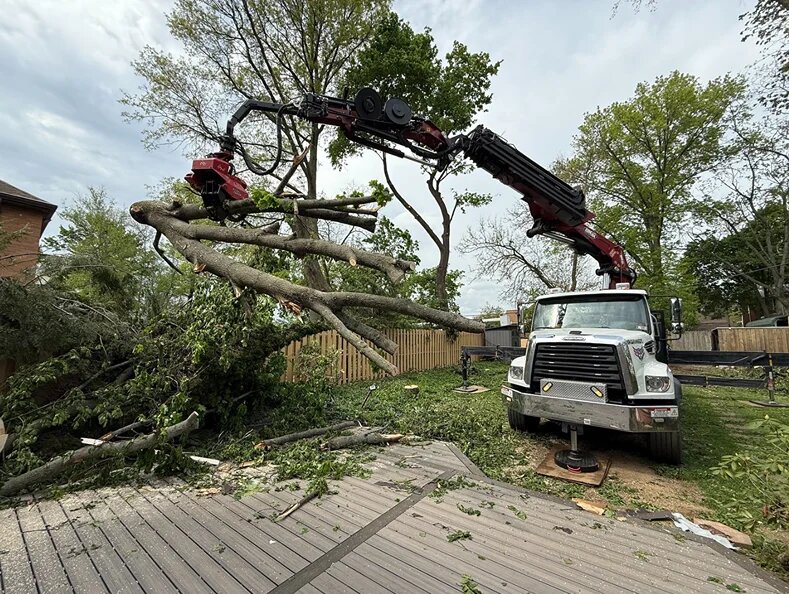
When a tree falls in winter, it rarely happens at a convenient time. Ice builds up. Snow weighs down branches. The ground freezes hard. One loud crack in the middle of the night and suddenly you’re staring at a tree across your driveway or leaning against your home.
This situation feels overwhelming fast. Safety becomes the first concern. Then property damage. Then the question of what to do next. In this article, you’ll learn exactly how to respond when a tree falls in winter, how winter fallen tree removal works, and when to call for emergency tree removal. At Shy Tree, we’ve responded to many winter calls, and preparation makes all the difference.
Start With Safety, Not Cleanup
Your first minutes set the tone for the whole event. A fallen tree can shift, roll, or snap under pressure. Ice hides holes, cords, and broken glass, so slow steps beat quick ones. Below are the safety checks that come first, before any cutting or dragging.
Scan for Power Lines and Service Drops
Look up and around the tree before you move closer. A branch can pull down a line that still carries power. Stay back, keep others back, and call the utility company.
Keep People and Pets Out of the Zone
Set a clear boundary around the tree. Use cones, a trash bin, or a bright rope if you have it. A limb can spring when ice melts or wind hits.
Watch for “Hung-Up” Limbs and Tension
Some branches hang in other trees after a fall. They can drop without warning. Stay out from under them and treat them as active hazards.
Call the Right Help, Fast
Once you confirm safety, you need a plan. Winter slows response times across many trades, and storms stack calls. A quick call can stop a bad situation from getting worse. Below are the calls that often matter most in the first hour.
Call 911 for Immediate Threats
If the tree hits power lines, blocks a main road, or traps someone, call 911. Give your address and describe the hazard in plain terms. Then wait at a safe distance.
Call Your Utility Company for Line Issues
Utility crews handle wires and poles, not tree crews. Let them clear the electrical risk first. After they finish, tree work can start safely.
Call a Qualified Tree Company for Emergency Tree Removal
A fallen tree often needs rigging, saw control, and a safe drop plan. Shy Tree offers 24/7 emergency tree removal, led by a Board-Certified Master Arborist. The crew starts with a risk check, then moves to removal and cleanup.
Take Photos and Notes for Insurance
After urgent calls, document the scene. Photos help claims, and they help contractors plan the safest cuts. Winter weather can change the damage fast, so capture details early. Below are the records that help most.
Photograph the Whole Scene From Several Angles
From a distance, snap broad views before moving closer. After that, capture tight images of where damage shows up – on roofs, walls, fences, or cars. Nearby features such as paths or mailboxes should appear in the frame too.
Record the Time and Weather Conditions
Midway through winter, jot the day and hour when you spotted that fallen tree. Because of blizzards, maybe ice storms, or just fierce winds, write which one knocked it down. When making an insurance case later, those facts become useful proof.
Save All Estimates, Reports, and Receipts
Keep your contractor’s estimate and invoice in one folder. Ask for a written assessment if the tree hit a structure. Shy Tree can provide clear documentation from an arborist-led evaluation.
Avoid DIY Cutting in Winter
A chainsaw feels like a quick fix. Winter makes that choice risky, even for people who cut firewood. Ice changes balance, and tension wood reacts fast. Below are the main hazards that drive many winter injuries.
Slips Turn Small Tasks Into Big Falls
Snow and ice remove traction. A small step to avoid a branch can send you down hard. Add a running saw, and the risk jumps.
Tension Wood Can Kick Back or Roll
A fallen trunk often holds stored pressure. One cut can release it and shift the log. That movement can pin legs, crush feet, or hit a wall.
Ladders and Roof Work Create Real Danger
A tree on a roof tempts people to climb up and cut it free. Winter roofs stay slick, and shingles break under weight. Leave roof-related removal to trained crews with proper rigging.
Protect Your Home From Secondary Damage
Falling trees tend to leave gaps, letting rain slip through little by little. Snow melts into water, then becomes ice again when cold returns – this cycle repeats itself endlessly. Every time things warm and freeze, leaks begin, stains creep across ceiling surfaces, mold grows without noise. Protection begins only once the initial damage has settled in place.
Cover Open Roof Areas With a Tarp
When needed, cover it with a tarp, but stay where it’s safe. Icy rooftops aren’t worth the risk. Wait until someone trained arrives to handle repairs properly.
Shut Off Utilities if You See Damage
If a branch hits your service mast, meter, or gas line area, shut things off at the main. Call the utility company for guidance. Do not touch damaged lines or fittings.
Clear a Safe Path for Access
Emergency crews and contractors need room to work. If a branch blocks a door, clear only what you can move by hand. Leave large pieces for winter fallen tree removal crews.
Get the Remaining Trees Checked
One fallen tree often points to a bigger issue nearby. Snow load, root damage, and hidden decay can affect other trees on the lot. A quick inspection can prevent a second fall next week. Below are the checks that matter after a winter event.
Request a Tree Risk Assessment
A risk assessment looks at structure, lean, root plate movement, and defect zones. It helps you decide what needs pruning, support, or removal. Shy Tree can provide this service through a Qualified Tree Risk Assessor.
Look for Cracks, Splits, and Sudden Lean
Walk your yard in daylight and scan trunks and major unions. Fresh cracks often show lighter wood. If a tree started leaning after the storm, treat it as unstable.
Ask About Cable and Bracing for Weak Unions
Some trees have value worth protecting. A support system can reduce failure risk in future storms. An arborist should decide if support fits the tree and the defect.
Learn Why a Tree Falls in Winter
Winter failures feel random, yet they follow patterns. Ice adds weight, wind adds force, and frozen ground changes root grip. A tree can look fine, then fail under one storm. Below are common winter triggers seen across Maryland yards.
Ice and Wet Snow Add More Weight Than You Think
Wet snow can load branches like concrete. Ice coats one side, and that uneven load twists limbs. Over time, that stress breaks weak unions.
Freeze and Thaw Loosen the Root Plate
A warm day melts the top layer of soil, then a cold night locks it again. That cycle can reduce root hold, especially in saturated ground. Then a gust tips the tree.
Hidden Decay Stays Quiet Until Stress Hits
Decay inside a trunk does not show from the street. Winter stress exposes it. An arborist visit during the growing season can catch early signs.
Do you need to remove every fallen tree right away? No, and the safest order depends on the hazard. Start with trees on homes, on roads, or near lines. Then handle yard debris once the site is stable.
Plan Ahead for the Next Winter Storm
After cleanup, plan for the next storm season. A small pruning job in fall can prevent a big emergency in January. Plant health care also supports stronger wood and better root function. Below are steps that reduce repeat events.
Schedule Structural Pruning Before Snow Season
A trained crew can reduce end weight on long limbs. They can correct weak branch spacing over time. This lowers failure risk under snow load.
Invest in Plant Health Care and Soil Testing
Trees are living organisms, and soil health drives stability. Soil testing can guide nutrient plans and amendments. Shy Tree offers plant health care that targets long-term tree strength.
Remove High-Risk Trees on Your Terms
Some trees pose a clear risk near a home or driveway. Removing them in calm weather is safer than a storm rush. An arborist-led plan keeps the work controlled and clean.
Need Help After a Tree Falls in Winter?
A winter fall feels heavy, and it can leave you stuck. You want fast action, and you also want the right calls. Shy Tree responds 24/7 across Maryland with emergency tree removal and storm cleanup. We do not just remove trees, we strive to create the best plans to protect and care for your trees in the long haul. Call any time, and we will help restore safety.